Why would a shoreline that looked postcard-blue in a July listing photo show forty feet of exposed rock and mud when you finally drive up to tour it in May?
The answer has nothing to do with the seller misrepresenting anything. It has to do with what Lake Koocanusa actually is. It is not a natural lake that fills each spring and holds steady through summer the way Flathead Lake does further south. Koocanusa is a reservoir, built when the Army Corps of Engineers completed Libby Dam on the Kootenai River, and its water level is a managed variable, not a fixed feature. Understanding that one fact changes how you should read a listing, how you should schedule a tour, and how you should think about the asking price on anything from a cabin near Rexford to a five-acre parcel off the Koocanusa Scenic Byway.
A Dam, Not Nature, Sets the Shoreline
Full pool for Koocanusa is 2,459 feet in elevation. That number is the reservoir's designed summer target, the closest thing to what a buyer pictures when they hear "lakefront." The Corps of Engineers lists Libby Dam's authorized purposes as flood control and power generation, with fishery and recreation as secondary uses. That ordering matters. Flood control comes first, which means the Corps deliberately draws the reservoir down through winter and early spring to create storage space ahead of snowmelt runoff from the Kootenai and Elk River basins. Only after that flood-risk window closes does the reservoir begin refilling toward its summer peak.
In practical terms, that peak tends to land in late July or early August, and even then it typically sits somewhere in the range of 7 to 11 feet below full pool rather than exactly at it. A 2021 report in the Cranbrook Daily Townsman quoted an Army Corps official forecasting that year's summer peak at roughly 10 feet below full pool, and noted the reservoir had peaked at 2,451 feet on August 9 the year before, in 2020. The specific number moves with snowpack and basin conditions from year to year, but the pattern holds: low in spring, rising through early summer, cresting in August, then falling again through fall.
If you are touring a property anytime outside that narrow late-summer window, you are very likely looking at less water than the listing photos show. That is not a defect in the property. It is the reservoir doing exactly what it was built to do.
What This Looks Like From the Dock
The 90-mile length of Koocanusa means the drawdown does not read the same everywhere. A protected cove near Rexford, the small community that was relocated to higher ground when the reservoir was originally built, holds water differently than an open, wind-exposed stretch near the Koocanusa Bridge, Montana's longest and highest bridge at roughly 2,437 feet long and about 270 feet above the water. Narrower coves tend to retain a usable waterline longer into the drawdown cycle. Broad, shallow stretches expose more reservoir bed sooner.
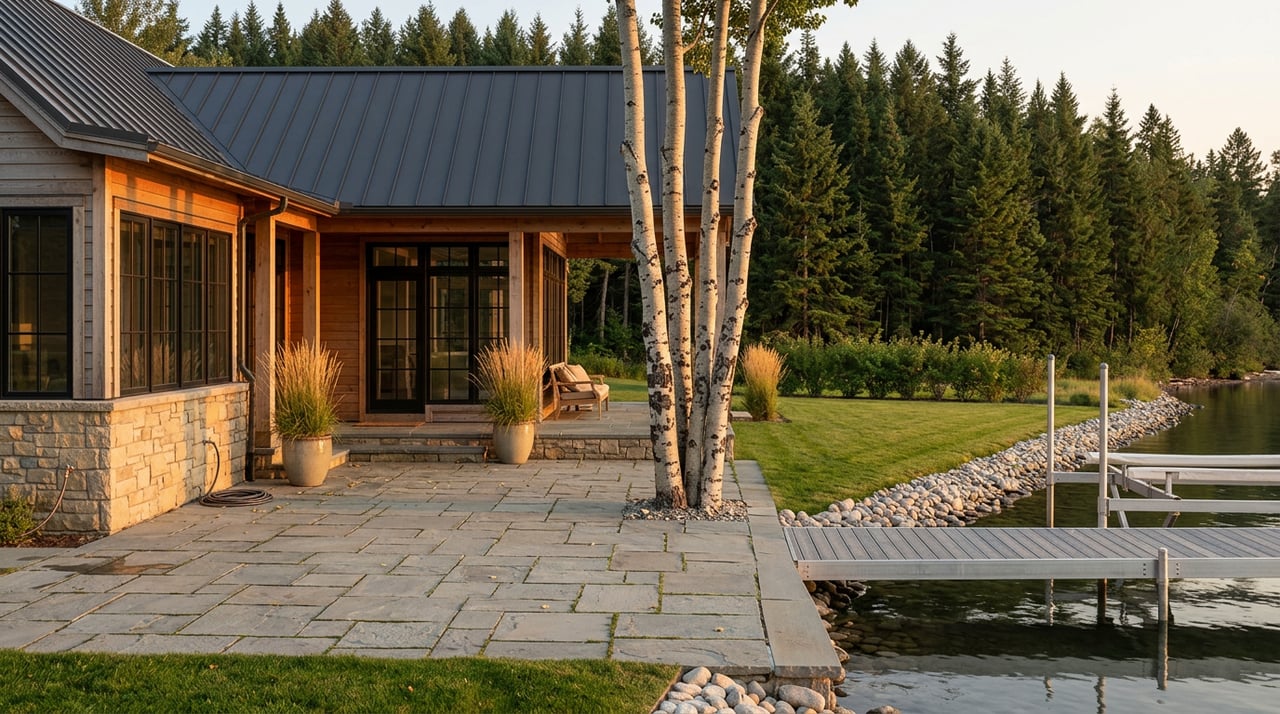
This is also why dock and boat lift design matters more here than it would on a natural lake. A fixed dock built for full pool can leave a boat sitting in mud by June. Properties with track-mounted or floating systems tend to handle the swing with far less inconvenience, and that detail is worth asking about before you fall for a listing photo taken in August.
Three questions worth asking before you schedule a tour on any Koocanusa property:
- When were the listing photos taken, and does the seller have photos from another season for comparison?
- Is this parcel on a protected cove or an open stretch of the reservoir?
- What kind of dock or lift is installed, and has it been used successfully across a full season of drawdown and refill?
None of these questions are complicated. Almost none of the generic lake-lifestyle listing copy floating around for this area mentions them, which is exactly why they are worth asking directly.
The Market Is Already Pricing In Patience
The Eureka and Rexford market reflects this reality even if the mechanism behind it rarely gets named. Across the trailing six months ending in July 2026, the combined Eureka and Rexford market saw 56 closed sales, a median sold price near $471,500, and a median time on market around 100 days, according to a local MLS-based report. Active listings during that window ranged from roughly $39,900 up to $3.6 million, a spread wide enough to include modest in-town homes, hobby acreage, and custom log estates on the water in the same dataset.
Zoom out to the broader region and the number holds up rather than standing out. The Northwest Montana Association of Realtors reported that homes across Flathead, Lincoln, and Lake counties sold in an average of 105 days in August 2026, down from 114 days the previous August, with 1,424 homes on the market region-wide, an increase of 11.5 percent from a year earlier. Sellers were still receiving close to 97 percent of asking price on average. Rexford, where direct reservoir frontage concentrates, has repeatedly shown up as the priciest city in Lincoln County on list price in market snapshots taken this year, which tracks with water access commanding a premium even when that water is not always at the elevation buyers picture.
Put those numbers together and a pattern emerges. A 100-day median in Eureka and Rexford is not a stalled or undesirable market. It sits close to what the wider region is already experiencing in 2026, and it fits a corridor where a serious buyer often wants to see a parcel across more than one season before committing, precisely because the reservoir looks different in April than it does in August. A seller who understands this can price and market accordingly instead of reading a longer time on market as a problem to panic-price away.
Not the Same Water as Flathead Lake
Buyers cross-shopping Koocanusa against Flathead Lake waterfront in Bigfork, Lakeside, or Whitefish are comparing two different kinds of water. Flathead Lake is a natural lake with modest, weather-driven fluctuation. Koocanusa is a managed reservoir with a documented, dam-controlled annual cycle tied to flood risk on the Kootenai and Elk Rivers. Neither is a better or worse property type. They are different instruments, and due diligence that works for one does not automatically transfer to the other. A buyer who tours a Flathead Lake property once and trusts what they saw is usually on safe ground. A buyer who does the same on Koocanusa without checking the season is working from incomplete information.
A Few Questions Buyers Ask
Does the water level swing affect every property on the reservoir equally? No. Protected coves near communities like Rexford tend to hold a usable waterline further into the drawdown than open, exposed stretches closer to the Koocanusa Bridge. Elevation and shoreline shape both matter more here than they would on a lake with a stable pool.
Is Koocanusa waterfront less valuable because of the fluctuation? Not based on what the data shows. Rexford's list prices have run above the Lincoln County median in recent market snapshots, and the wide price range across active Eureka and Rexford listings reflects strong demand for the reservoir's remote, forested setting. The fluctuation is a factor to plan around, not a discount built into every listing.
If you are weighing a property on Lake Koocanusa against something on Flathead Lake, or you just want a straight answer about what a specific parcel's waterline looks like in a given month, I would rather walk it with you than let a listing photo do the talking. Heidi Lane works this whole corner of Northwest Montana, reservoir and natural lake alike, and knows which questions matter before you make an offer. Let's Connect.